
Types of Heaters for Australian Homes: Which One Is Right for You?
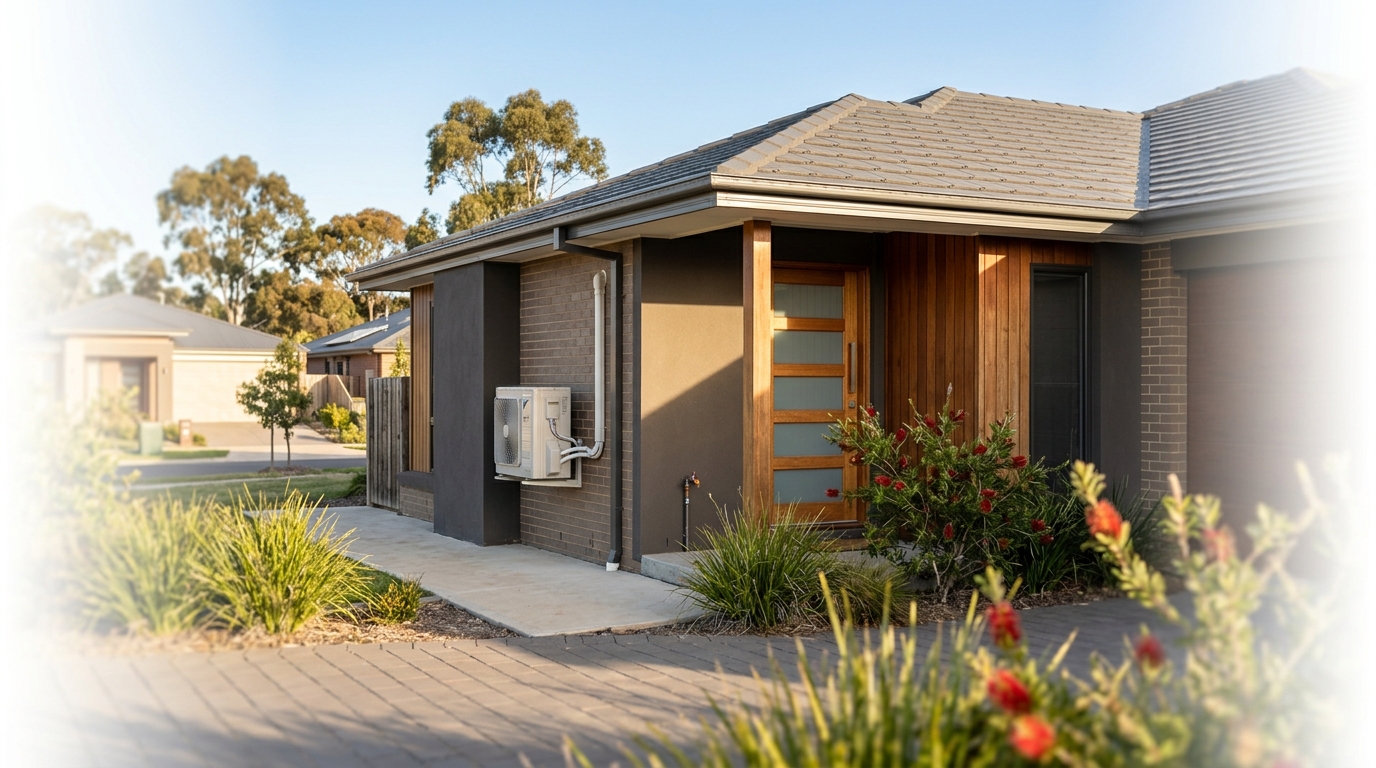
Understanding the Different Types of Heaters Available in Australia
Australia's winters catch a lot of people off guard. Southern states like Victoria, South Australia and Tasmania regularly see overnight temperatures drop below 5 degrees Celsius, and even parts of New South Wales and Western Australia get genuinely cold. Choosing between the many types of heaters on the market is harder than it looks, and the wrong choice can mean shivering through winter or paying far more than you need to on energy bills.
This article covers the four main categories you'll encounter: electric heaters, gas heaters, reverse cycle split systems and ducted heating systems. For each one, we'll compare running costs, energy efficiency and the situations where each type performs best, so you can make a confident, well-informed decision before you spend a cent.
Key takeaways
- Reverse cycle split systems are the most efficient types of heaters, delivering three to five kilowatts of heat per kilowatt of electricity used.
- Electric heaters offer low upfront costs but high running expenses, making them best for occasional use.
- Gas heaters provide competitive running costs where natural gas is available, while ducted systems suit whole-home heating in larger properties.
Electric Heaters: Portable, Affordable and Easy to Use
Electric heaters are the most accessible heating option for Australian households, with portable units available from as little as $30 and no installation required. They convert electricity directly into heat, which makes them simple and safe to use anywhere with a power point. The trade-off is running cost: electric resistance heaters consume one kilowatt-hour of electricity for every kilowatt of heat produced, making them significantly more expensive to run than reverse cycle systems over a full winter.
Here's how the main electric heater types compare at a glance:
| Heater Type | Best For | Upfront Cost | Running Cost | Noise Level |
|---|---|---|---|---|
| Fan heater | Small rooms, quick heat bursts | $30 to $80 | High | Moderate to loud |
| Convection heater | Bedrooms, living areas | $60 to $200 | High | Silent |
| Radiant/infrared heater | Spot heating, outdoor areas, draughty rooms | $50 to $250 | High (when in use) | Silent |
| Oil-filled column heater | Bedrooms, long heating sessions | $80 to $250 | High | Silent |
| Panel heater | Small rooms, permanent wall mounting | $100 to $300 | High | Silent |
Fan Heaters and Convection Heaters
Fan heaters work by blowing air across a heated element, pushing warm air into the room almost immediately. That speed is their biggest selling point. A fan heater can take the chill off a small bedroom or home office within minutes, making them a practical choice for short heating sessions or rooms you only use occasionally. Most units sit in the $30 to $80 range, so the upfront cost is minimal.
The downside is noise. The fan runs continuously while the unit is on, which some people find disruptive in quiet environments like bedrooms or study spaces. Convection heaters solve that problem by heating air through natural circulation rather than a fan, producing warmth silently. They take a little longer to heat a room but are well suited to living areas and bedrooms where background noise matters. Expect to pay $60 to $200 for a quality convection unit.
Radiant, Oil-Filled and Panel Heaters
Radiant and infrared heaters work differently from the other types. Rather than warming the air in a room, they emit infrared radiation that heats people, furniture and surfaces directly. This makes them highly effective in draughty rooms or outdoor entertaining areas where heated air would simply escape. They produce warmth the moment they're switched on and stop the moment they're off, so they suit situations where you need targeted, immediate heat rather than whole-room comfort.
Oil-filled column heaters are a quieter, longer-lasting alternative. The oil inside the unit is heated by an electric element and retains warmth for a period after the heater is switched off, which can reduce running time and costs slightly compared to other electric types. They're silent, safe to leave on overnight and well suited to bedrooms. Panel heaters are the slimmest option, designed to be wall-mounted permanently with a built-in thermostat for temperature control. They work well in smaller rooms where floor space is limited, with prices typically ranging from $100 to $300.
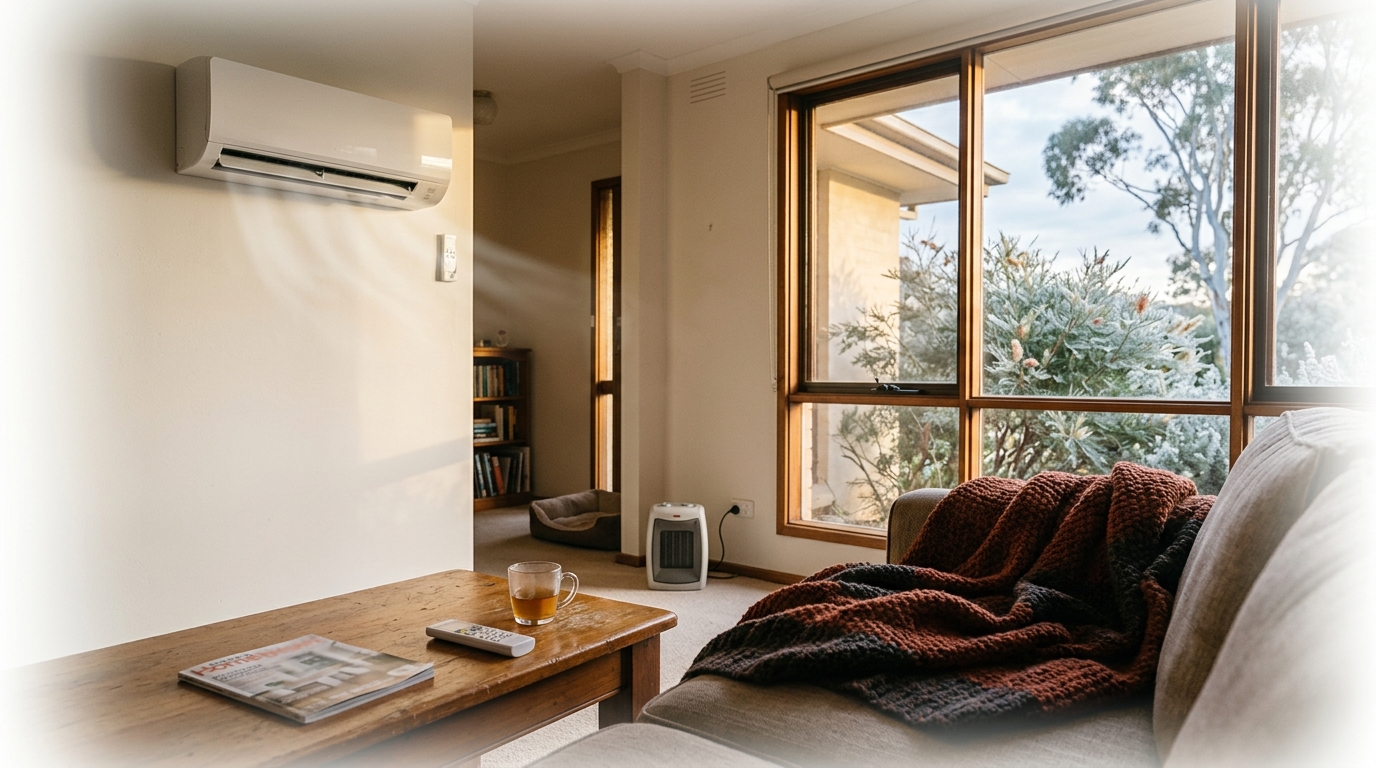
Gas Heaters: High Output for Larger Living Spaces
Gas heaters split into two distinct types: flued and unflued. Flued gas heaters are permanently installed with a duct or flue that vents combustion gases directly outside, making them safe for extended use in living areas. Unflued gas heaters are portable units that release combustion by-products, including water vapour and carbon monoxide, directly into the room, which means they require adequate ventilation and should not be run for long periods in sealed spaces.
On running costs, gas heating has a clear advantage over standard electric resistance heaters. Natural gas is generally cheaper per unit of energy than electricity in Australia, so a gas heater producing the same amount of heat as an electric bar or fan heater will typically cost less to run per hour. For households that heat large living areas for several hours each day through winter, that difference adds up.
There are real limitations to factor in, though. Flued gas heaters require professional installation, and the cost of fitting a flue, connecting to the gas line and commissioning the unit can add several hundred dollars to the upfront price. Unflued portable models are cheaper to buy and need no installation, but the indoor air quality trade-off is significant. The moisture they release can contribute to condensation and mould in poorly ventilated homes.
Gas availability is also not universal. Many regional and rural areas across Australia have no reticulated natural gas network, leaving LPG as the only alternative. LPG is considerably more expensive per unit of energy than natural gas, which narrows the running cost advantage considerably. If you're outside a metropolitan area, check gas availability in your suburb before committing to a gas heating system.
Reverse Cycle Split Systems: The Most Efficient Types of Heaters for Most Homes
Reverse cycle split systems are the most efficient heating option available to Australian households, using heat pump technology to move warmth from the outside air into your home rather than generating heat from scratch. For every one kilowatt of electricity consumed, a quality reverse cycle system delivers between three and five kilowatts of heating output, giving a coefficient of performance (COP) of three to five. No electric resistance heater, and no standard gas heater, can match that efficiency ratio.
That efficiency translates directly into lower running costs. A reverse cycle system heating a living room for four hours each evening will use a fraction of the electricity that a fan heater or oil column heater would consume to achieve the same result. Over a full winter, the savings are substantial, and because the same unit cools in summer, it replaces the need for a separate air conditioner entirely.
Modern inverter models are also far more capable in cold conditions than older fixed-speed units. Many current models can operate efficiently at outdoor temperatures as low as -15°C, which means they perform reliably in alpine areas of Victoria and New South Wales, in Canberra winters and across Tasmania. For the vast majority of Australian climate zones, a reverse cycle split system will heat effectively on even the coldest nights.
Split systems are available in a wide range of capacities, from around 2kW for small bedrooms up to 9.5kW and beyond for large open-plan living areas. At the entry level, the Daikin Cora 2.5kW Inverter Split System (FTXV25WVMA) is priced from $1,054 and suits bedrooms and smaller rooms well. For medium to large living areas, the Daikin Cora 5kW (FTXV50WVMA) is available from $1,697, while the Mitsubishi Electric AP Series 5kW (MSZAP50VGKD) is a popular mid-range choice at $1,716, known for its quiet operation and reliable performance across Australian conditions.
Choosing the Right Capacity for Your Room
Matching split system capacity to room size is one of the most important steps in getting good heating performance. A unit that's too small will run constantly and still struggle on cold days, while an oversized unit will short-cycle, reducing efficiency and comfort. As a starting point, allow roughly 0.1kW of heating capacity per square metre of floor space, so a 25 square metre bedroom needs around 2.5kW and a 50 square metre living area needs around 5kW.
That figure is a guide, not a rule. Rooms with high ceilings, poor insulation or large windows will need more capacity than the basic calculation suggests. Climate zone matters too: a home in Hobart or the ACT will need more heating output than the same-sized room in Brisbane or coastal New South Wales. Homes in cooler climate zones should add 10 to 20 per cent to the base calculation as a buffer.
For an accurate recommendation, it's worth using a sizing tool or speaking with a specialist before you buy. Browse the full range of split system air conditioners to compare capacities and find models suited to your room size, or explore Daikin split systems if you're considering the Cora range as your starting point.
Ducted Reverse Cycle Systems: Whole-Home Heating Done Right
Ducted reverse cycle systems are the premium whole-home heating solution, distributing conditioned air through a network of ceiling or floor vents across every room in the house. A single outdoor unit and central indoor unit handle the entire home, with zoning controls letting you heat only the rooms that are occupied. For households that want consistent, invisible heating without a unit on every wall, ducted systems are the top of the range.
The key advantages over split systems come down to coverage, aesthetics and control. All the hardware sits in the roof cavity or under the floor, so there's nothing visible in your living spaces beyond the vent grilles. Zoning divides the home into sections, typically two to eight zones, so you're not paying to heat bedrooms during the day or living areas overnight. Brands like Daikin and Mitsubishi Electric both offer ducted systems with smart zoning controls that can be managed via smartphone apps, making it straightforward to set schedules and adjust zones remotely.
Running costs remain competitive because ducted reverse cycle systems use the same heat pump technology as split systems, moving heat rather than generating it. The efficiency advantage over gas or electric resistance heating still applies across the whole home.
The significant trade-off is upfront cost. Installed prices for ducted air conditioners typically range from $5,000 to $15,000 or more, depending on home size, the number of zones and the complexity of the ductwork. That cost is most justifiable in new builds or major renovations, where ductwork can be installed before walls and ceilings are finished. Retrofitting a ducted system into an existing home is possible but adds labour cost and disruption, which makes split systems a more practical choice for most established homes.
For larger properties where whole-home comfort is the priority, though, a ducted system is hard to beat.
Which Heater Is Right for Your Home? A Quick Summary
The right heater depends on your home, your budget and how long you plan to stay. Here's a quick breakdown of where each type fits best:
- Electric heaters suit renters, small spaces or anyone needing a cheap, portable short-term fix. Running costs are high, so they're best kept for occasional use.
- Gas heaters work well in homes with an existing gas connection and larger living areas where high heat output is needed quickly. Factor in ventilation requirements and gas availability in your area.
- Reverse cycle split systems offer the best balance of efficiency, running cost and year-round versatility for most Australian households. They heat and cool, require no gas connection and pay back their upfront cost through lower energy bills over time.
- Ducted systems are the top choice for whole-home comfort in larger properties, particularly new builds where ductwork can be installed cleanly from the start.
Ready to find the right system? Browse our Mitsubishi Electric split systems for a reliable, efficient starting point, or get in touch with the Air Conditioning Experts team for personalised advice on the best heater for your home and budget.
Frequently Asked Questions
What is the cheapest type of heater to run in Australia?
Reverse cycle split systems are the cheapest type of heater to run in Australia. They use heat pump technology to deliver three to five kilowatts of heat for every one kilowatt of electricity consumed, making them two to five times more efficient than electric resistance heaters. Gas heaters can be competitive in homes with a natural gas connection, but they cannot match the efficiency of a quality inverter split system.
Are electric heaters or gas heaters better for Australian homes?
For most Australian homes, a reverse cycle split system outperforms both electric resistance heaters and gas heaters on efficiency and running cost. If you're choosing strictly between electric and gas, gas heaters offer lower running costs in homes with a natural gas connection and large living areas that need high heat output quickly. Electric heaters win on convenience, portability and upfront price, but cost significantly more to run over a full winter.
What size reverse cycle system do I need to heat my living room?
A useful starting point is 0.1kW of heating capacity per square metre of floor space, so a 50 square metre living area needs roughly a 5kW system. Rooms with high ceilings, poor insulation or large windows will need more capacity than this basic calculation suggests. Homes in cooler climate zones like Victoria, Tasmania or the ACT should add 10 to 20 per cent to the base figure as a buffer.
Can a split system heat a whole house?
A single split system can heat an open-plan living area effectively, but it won't distribute warmth to closed-off bedrooms or separate rooms on its own. For whole-home heating, you'd need either a split system in each main room or a ducted reverse cycle system, which distributes conditioned air through ceiling vents across the entire home. Ducted systems are the more practical solution for larger properties where consistent coverage across multiple rooms is the priority.
Is ducted heating worth the cost?
Ducted reverse cycle heating is worth the cost if you want whole-home comfort, a clean aesthetic with no wall-mounted units and the ability to zone different areas of the house. Installed prices typically range from $5,000 to $15,000 or more, so the investment is most justifiable in new builds or major renovations. For most established homes, a combination of reverse cycle split systems in key rooms delivers excellent comfort at a much lower upfront cost.
Need expert advice?
Our team can help you choose the right air conditioning system for your space.